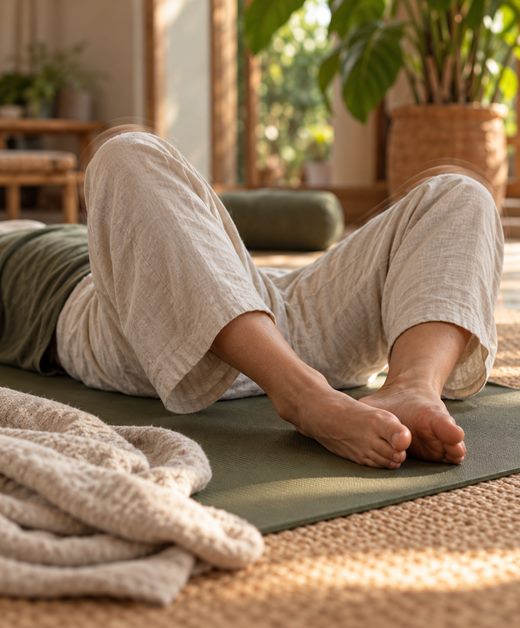
You need something you can use right now: at your desk, in a queue shop, or lying awake at night. Grounding techniques are short, practical and mostly invisible to other people.
In short: feeling your feet, holding something cold, naming what you see, slow breathing, pressing your palms together and walking slowly are simple techniques that can help you feel present. Try a few and keep what helps.
Ten techniques (each under two minutes)
1. Feel your feet
- Press both feet into the floor for a few seconds, then release.
- Notice heels, arches and toes. Repeat.
2. Hold something cold
- Hold a cool glass, metal object or ice pack wrapped in a cloth.
- Notice temperature and texture.
3. Name what you see
- Look around and quietly name five objects or colours.
4. 5-4-3-2-1 senses
- Five things you see, four you touch, three you hear, two you smell, one you taste.
Full guide: 5-4-3-2-1 technique.
5. Clench and release
- Make fists or hold the edge of a desk firmly for a few seconds, then let go.
Cleveland Clinic lists this among physical grounding options.
6. Palms together
- Press your palms together in front of your chest, then release and notice.
7. Water on your hands
- Run cool or warm water over your hands and notice the sensation.
8. Slow stretch
- Roll your neck gently, stretch your arms overhead, or bring one knee toward your chest if standing feels steady.
9. Kind statement
- Silently say something steadying, such as "I am here" or "This will pass".
Cleveland Clinic calls these soothing grounding techniques.
10. Slow walk
- Walk slowly and notice each footstep and the air on your skin.
What you might notice: a little more steadiness, or no change yet. How to stop: finish with one slow breath and look around.
Which to try when
- At work: feel your feet, palms together, name objects silently.
- In public: feet on the floor, one cold object, 3-3-3 (three things you see, hear, touch).
- At night: kind statement, slow breath, feel the bed or floor under you. Keep eyes open if closing them feels uneasy.
If grounding does not help, try a different technique or add gentle movement. If you often feel overwhelmed, consider professional support. See also somatic grounding. These practices are wellness education, not a treatment for anxiety.