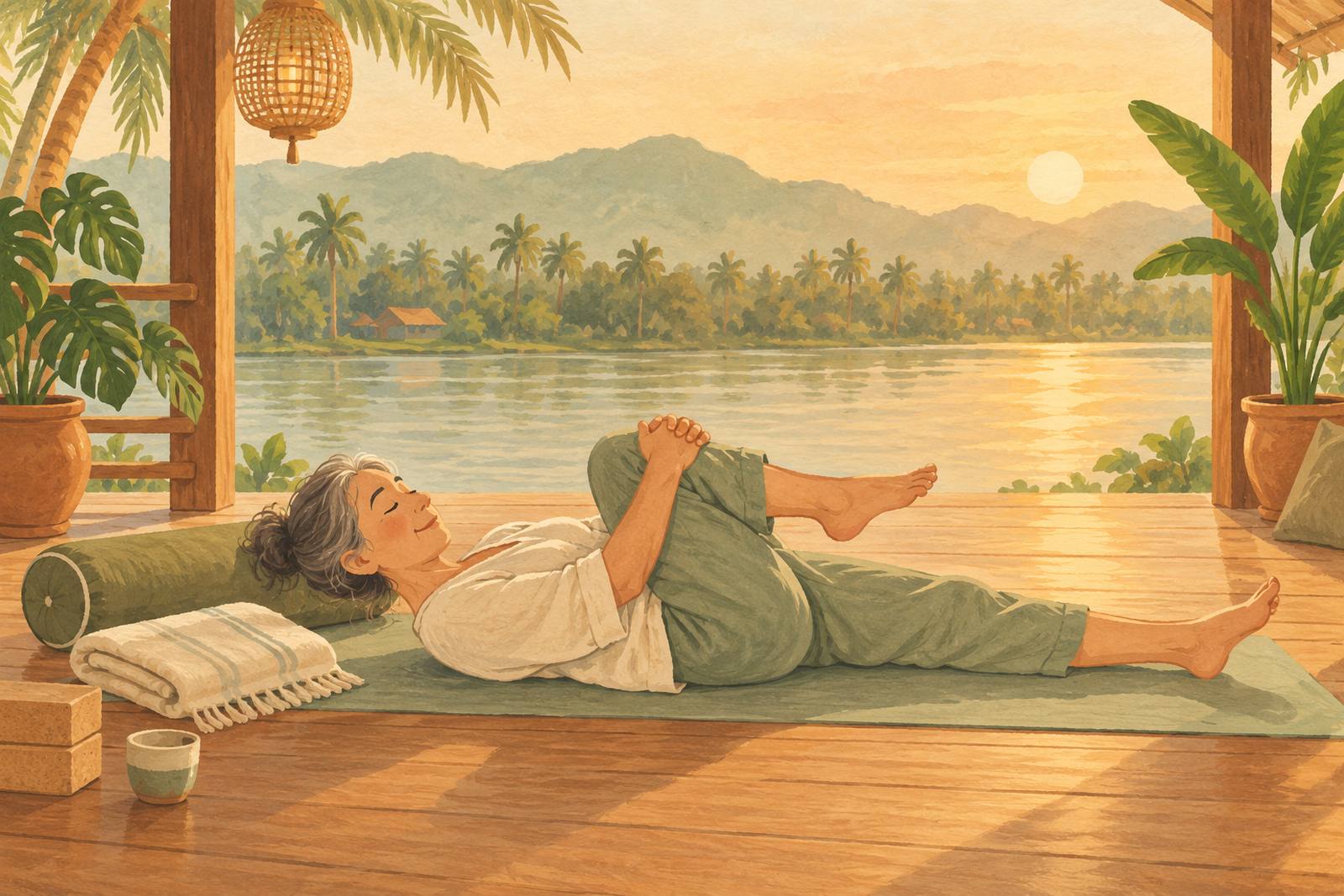
You do not have an hour. You have five minutes, a tight chest and a mind that will not slow down. A short practice you can actually fit in is worth far more than a long one you never get to.
In short: five minutes is enough for a gentle reset. Combine a slow breath, a little movement and a moment of stillness to help your body settle. It is a quick tool, not a cure, and it can be done almost anywhere.
Why five minutes can be enough
Short practices can feel calming for many people. The NHS describes a simple breathing exercise that takes just a few minutes and can be done sitting or standing, and Harvard Health notes that relaxation techniques such as breathing, body scanning and gentle movement can be done in short sessions. Johns Hopkins describes stress-relief practices that take only a few minutes too.
Research on somatic exercises specifically is limited, so think of this as a practical, gentle option rather than a proven treatment. If you are new to the idea, read our guide to somatic exercises.
The 5-minute routine
Move slowly and stay within comfort. You can do this standing, sitting or lying down.
1. Slow breath (1 minute)
- Sit or stand comfortably, with your feet on the floor.
- Breathe in gently through your nose, letting your belly rise.
- Breathe out slowly, a little longer than you breathed in.
- The NHS suggests breathing in for five and out for seven. Find a count that feels easy for you.
2. Shake and loosen (1 minute)
- Shake out your hands and wrists, as if flicking off water.
- Let it travel into your arms and shoulders.
- Gently shift your weight from foot to foot. Keep your knees soft.
3. Shoulders and neck (1 minute)
- Lift your shoulders towards your ears as you breathe in.
- Let them drop slowly as you breathe out.
- Repeat a few times, then slowly turn your head from side to side within a comfortable range.
4. Press and release (1 minute)
- Press your feet firmly into the floor for a few seconds, then release.
- Press your palms together in front of your chest, then release.
- Notice the contrast between pressing and letting go.
5. Still and notice (1 minute)
- Stay still with your hands resting on your belly or thighs.
- Take a few easy breaths and notice how you feel: your breath, your jaw, your shoulders.
- Look around the room before you go back to your day.
What you might notice: a slower breath, slightly softer shoulders, a little more space, or not much. Short practices have modest effects, and that is fine. How to stop: you can stop at any point. If you feel dizzy, sit down and breathe normally.
Where and when to use it
- At your desk: skip the standing parts and do breath, shoulders, and press and release in your chair.
- Between tasks: a quick reset before a meeting or after a difficult call.
- After work: to mark the end of the working day.
- When anxious or wired: the slow breath and press-and-release steps are easy to do unnoticed.
If you have an injury or a medical condition, check with a health professional first and skip any movement that hurts.
When you want more than five minutes
If five minutes helps, you might try the longer somatic exercises for stress routine or the 10-minute beginner routine. For breathing in more depth, see relaxation breathing.
A short practice cannot do everything. If stress is overwhelming or lasting, please speak with a doctor or mental-health professional. When you are ready, a morning routine is a good way to make it a habit.