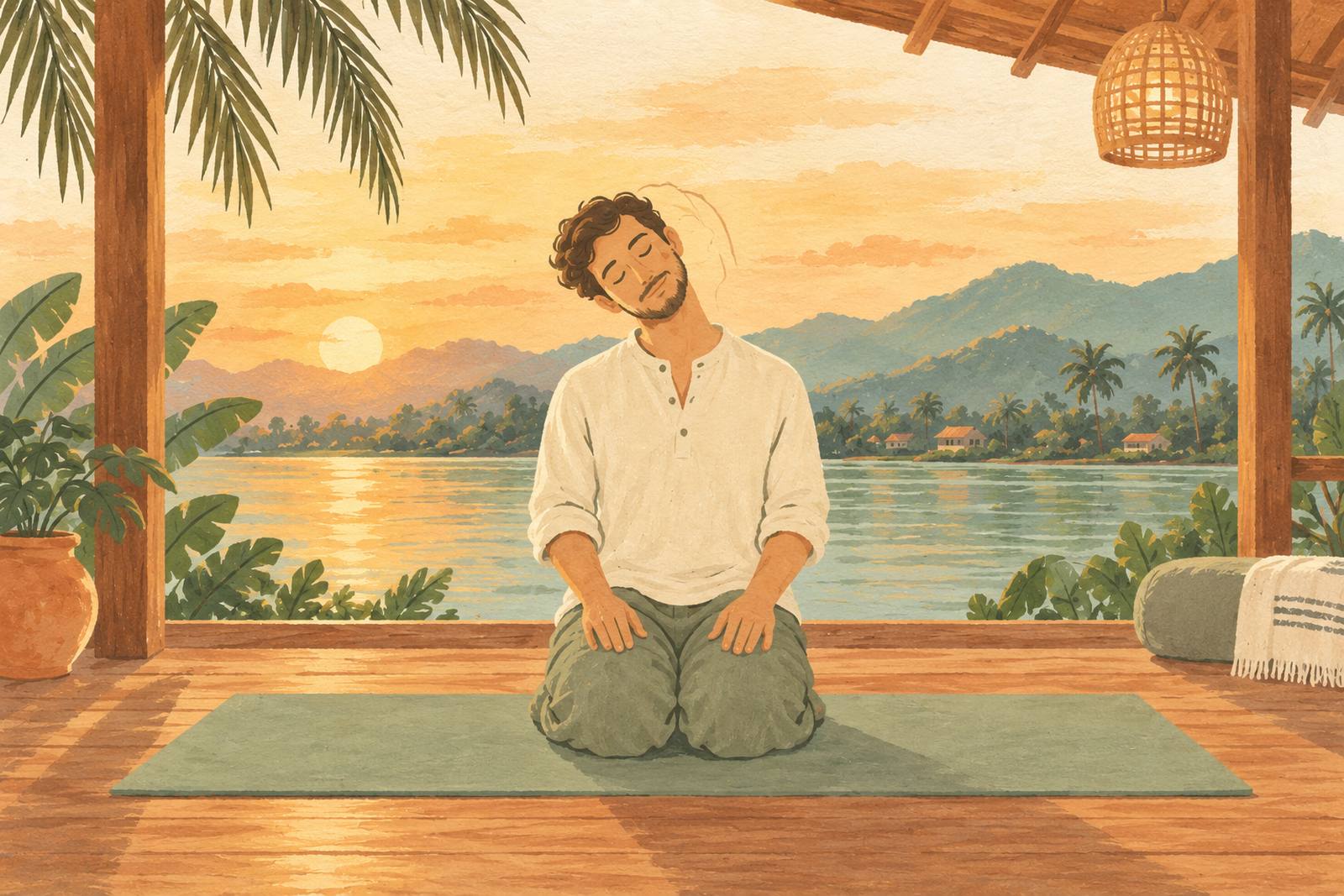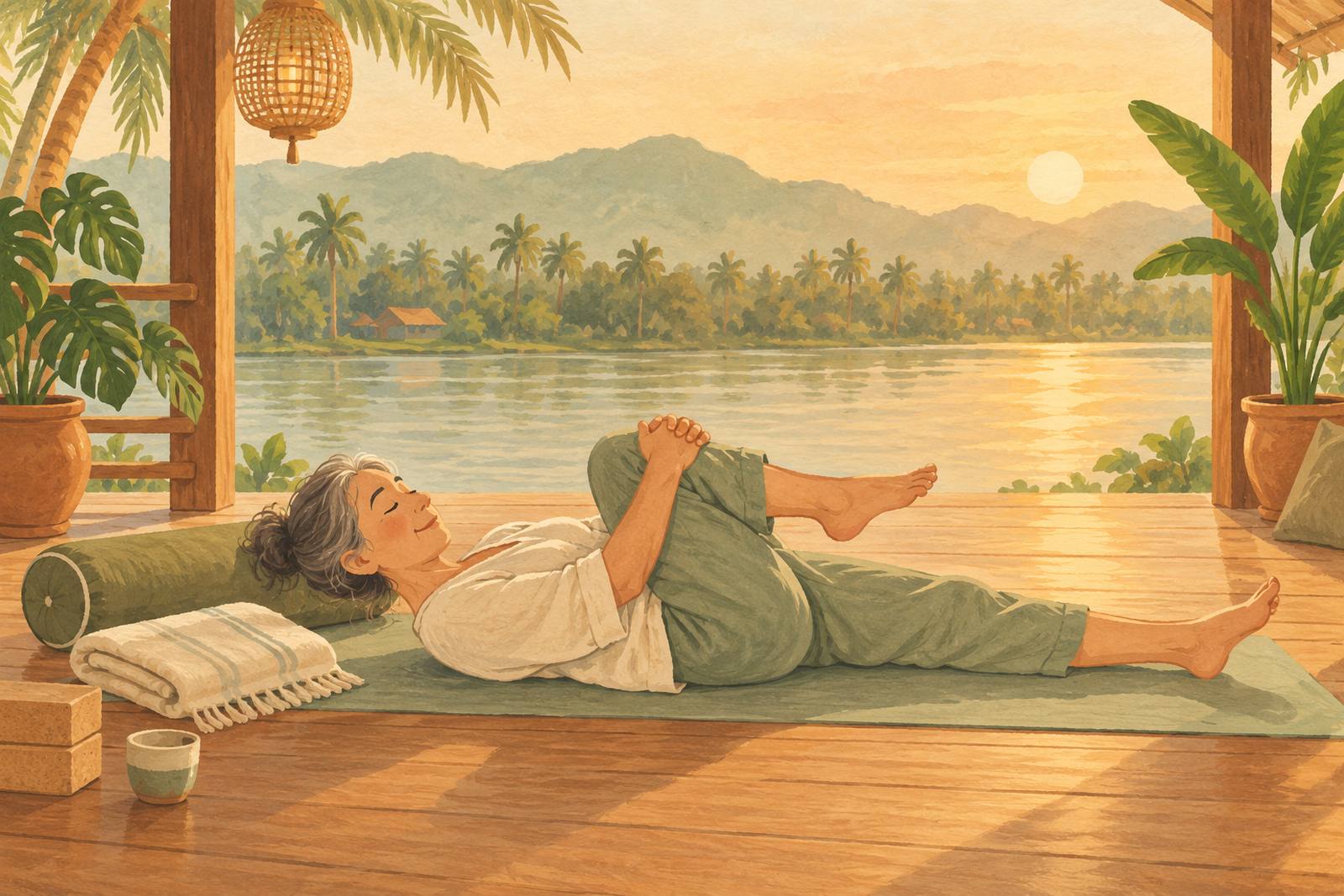
You understand the idea of regulating your nervous system. Now you want something you can actually do, ideally without any equipment and in a few minutes.
In short: long-exhale breathing, orienting, grounding through the feet, gentle rocking, self-holding, shaking out the limbs and a short body scan are simple exercises that can help your nervous system settle. Each takes one to three minutes and you can do them almost anywhere.
How regulation exercises work
When you are stressed, your body shifts towards alertness: faster breathing, tighter muscles, a narrowed focus. These exercises work with the body rather than against it. They give your system gentle signals that it is safe enough to ease down, through the breath, your senses, your sense of weight and support, and slow movement.
They are not a treatment or a cure, and they will not feel the same for everyone. Think of them as small experiments: try one, notice what happens, and keep what helps. For an overview of the bigger picture, see our guide to nervous system regulation.
Before you begin: go at your own pace, keep your eyes open if closing them feels uncomfortable, and stop whenever you want to. There is no right or wrong way to do any of these.
1. Long-exhale breathing
Time: 1 to 3 minutes.
- Sit or lie down comfortably and let your shoulders drop.
- Breathe in gently through your nose for a count of about four.
- Breathe out slowly through your nose or softly pursed lips for a count of about six.
- Repeat for around ten breaths, without forcing or holding the breath.
What you might notice: a slower pace, a softer belly or shoulders, or a little more quiet. How to stop: return to normal breathing. If counting makes you tense or dizzy, drop the counting and simply let the exhale be a little longer than the inhale.
2. Orienting to your surroundings
Time: 1 to 2 minutes.
- Slowly turn your head and look around the room, letting your eyes rest wherever they are drawn.
- Quietly name five things you can see, such as a colour, a shape or a plant.
- Notice any object that feels pleasant or neutral and let your gaze rest on it for a few breaths.
- Allow your exhale to lengthen as you look.
What you might notice: a sense of being more here in the room, or a gentle widening of attention. How to stop: simply finish looking around and take one slow breath.
3. Grounding through the feet
Time: 1 to 2 minutes.
- Sit or stand with both feet flat on the floor.
- Gently press your feet down, as if pushing the floor away, for a few seconds.
- Release the pressure and feel the contact of your feet with the ground.
- Repeat three or four times, then notice the weight of your body being supported.
What you might notice: warmth or tingling in the legs and a steadier feeling. How to stop: release the pressure and rest. For more ideas like this, try our grounding exercises.
4. Gentle rocking or swaying
Time: 1 to 3 minutes.
- Sit or stand comfortably.
- Begin to rock slowly from side to side, or forwards and backwards, in a small, easy rhythm.
- Let your arms hang loose and your jaw soften.
- Keep the movement slow and notice how your body wants to move.
What you might notice: a soothing rhythm, a softer back or a sense of ease. How to stop: let the movement get smaller and smaller until you are still, then take a slow breath.
5. Self-holding
Time: 1 to 2 minutes.
- Place one hand on your chest and the other on your belly, or cross your arms and rest your hands on your upper arms.
- Notice the warmth and gentle pressure of your own hands.
- Breathe slowly, letting your exhale be a little longer than your inhale.
- Stay for as long as it feels comfortable.
What you might notice: warmth, comfort or a feeling of being supported. How to stop: slowly lower your hands. If touch does not feel right for you today, rest your hands on your thighs instead.
6. Shaking out the limbs
Time: 1 to 2 minutes.
- Stand or sit with your feet supported.
- Gently shake out your hands and wrists, as if flicking off water.
- Let the shake travel into your arms and shoulders, then into your legs if that feels good.
- Keep it loose and light, then pause and notice how your body feels.
What you might notice: a tingling, lighter feeling in the arms and legs, or looser shoulders. How to stop: slow the shaking gradually and stand still for a few breaths. Skip this exercise if shaking is uncomfortable, or if you have an injury or a condition where movement could be unsafe. To explore more, see our shaking and tremoring guides.
7. A two-minute body scan
Time: about 2 minutes.
- Sit or lie down and bring your attention to your feet.
- Slowly move your attention upwards: legs, hips, belly, chest, hands, shoulders, jaw, face.
- At each place, simply notice what you feel, such as warmth, tightness or no sensation, without trying to change it.
- Finish by noticing your whole body resting and supported.
What you might notice: areas you had not realised were tense, or a general quieting. How to stop: open your eyes, look around the room and feel your feet on the floor. If focusing on the body feels uncomfortable, focus on your surroundings instead.
How to choose the right exercise for the moment
There is no best exercise, only the one that suits your body right now. Here are some starting points:
- Wired or racing: try long-exhale breathing or grounding through the feet.
- Overwhelmed by noise or busyness: try orienting, then slow breathing.
- Tense or restless: try gentle rocking or shaking out the limbs.
- Needing comfort: try self-holding.
- Winding down in the evening: try the body scan, or read how to relax your nervous system before sleep.
A few minutes once or twice a day tends to help more than an occasional long session. If an exercise makes you feel worse, stop, look around the room, feel your feet and choose a gentler option next time. You may also prefer to practise with a trained guide.
For what to do in the moment when you feel on edge, read how to calm your nervous system. If you are new to body-based practice, our somatic exercises for beginners is a gentle next step, and somatic exercises for stress goes deeper.