People say "shake it off" as if it were obvious. You want to know whether there is any science behind shaking for tension, or whether it is only wellness talk.
In short: shaking moves the muscles rhythmically, and many people feel looser afterwards. There are plausible explanations and a few small early studies of TRE®, but no direct trials of voluntary shaking. It is not scientifically proven.
What we can say with confidence
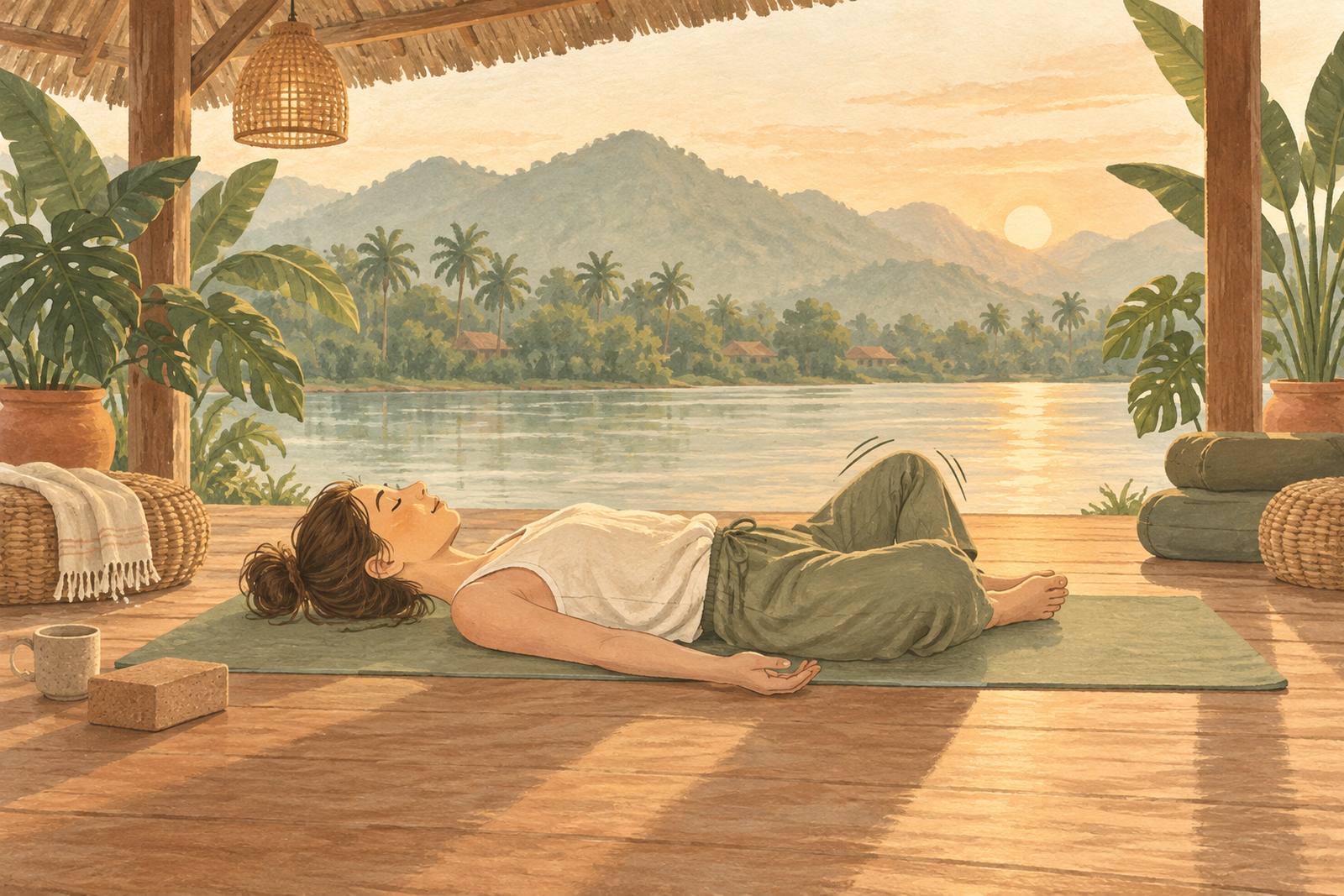
Stress makes muscles tense. The American Psychological Association describes that tension as almost a reflex, and notes that with brief stress the muscles usually release when the stress passes. Mayo Clinic notes that almost any form of exercise can act as a stress reliever. Rhythmic movement can feel loosening; that is an experience people report, not a measured result for shaking specifically.
What we cannot claim
There is no controlled trial of voluntary shaking for stress. Do not take evidence for general exercise, dance or TRE® as proof that shaking "works". Claims that shaking "completes the stress cycle" or "discharges stored energy" are popular framings, not established mechanisms.
Early TRE® studies (not the same as voluntary shaking)
A 2009 pilot with 61 students found a reduction in state anxiety after six sessions of an exercise routine that induced tremors; heart-rate-variability findings were mixed and the author called the results not entirely conclusive. A 2026 scoping review of 22 TRE studies found preliminary promise and called for more rigorous research. These studies do not prove that a three-minute voluntary shake relieves tension.
Do animals shake off stress?
Animals are often observed trembling after a threat. In the somatic literature, Peter Levine has used that observation to argue that humans suppress a natural discharge. It is a popular comparison, and it has not been rigorously studied. Humans are more complex. Keep curiosity, not certainty.
Before-and-after body check (practice)
- Stand still. Notice your jaw, shoulders and breath for 30 seconds.
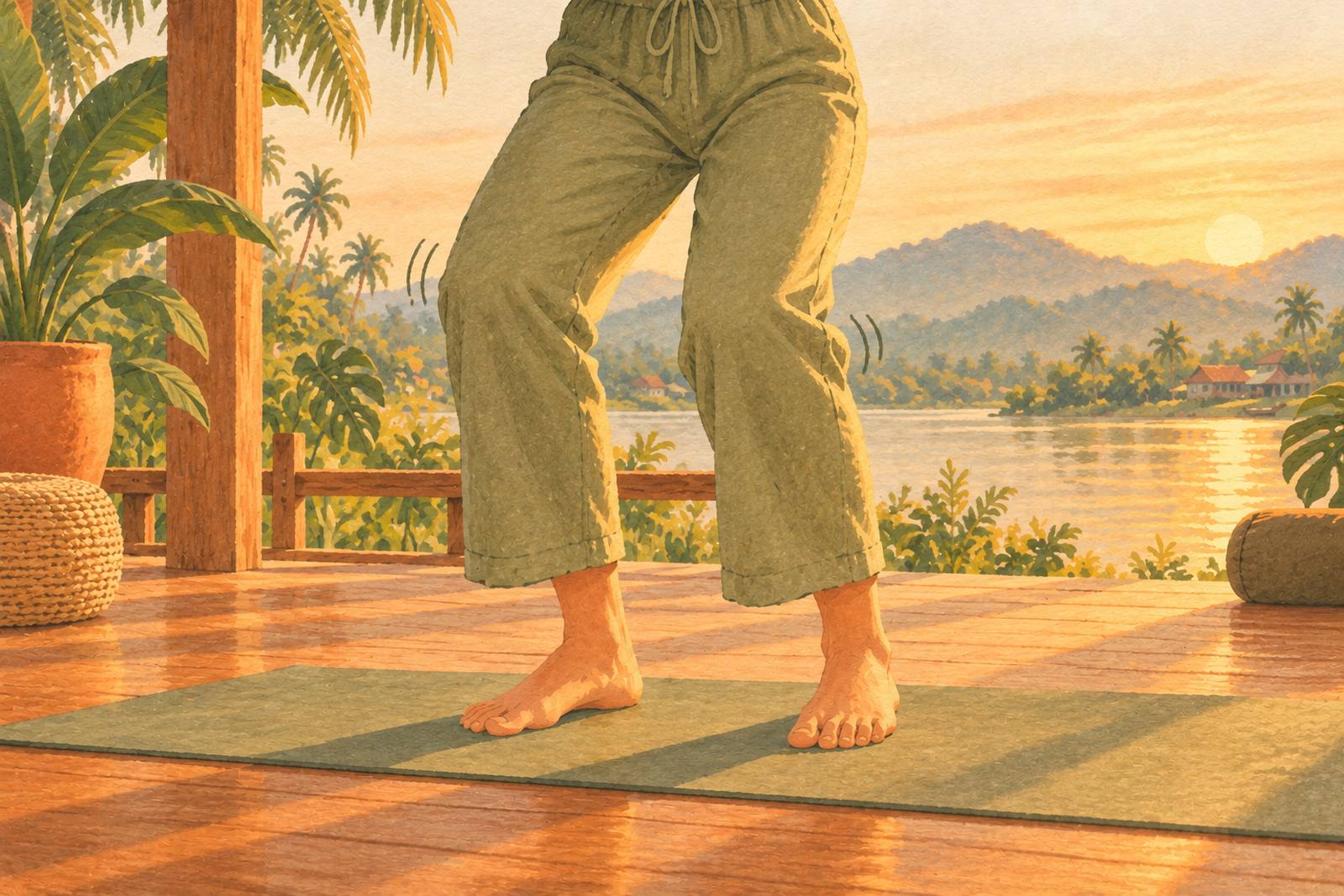
- Shake loosely for about three minutes, then stop.
- Stand still again. Notice what, if anything, has changed.
A few minutes once a day or after stressful moments is enough to explore whether it helps you. See somatic shaking and why the body shakes after stress. These practices are wellness education and can sit alongside professional care, not replace it.