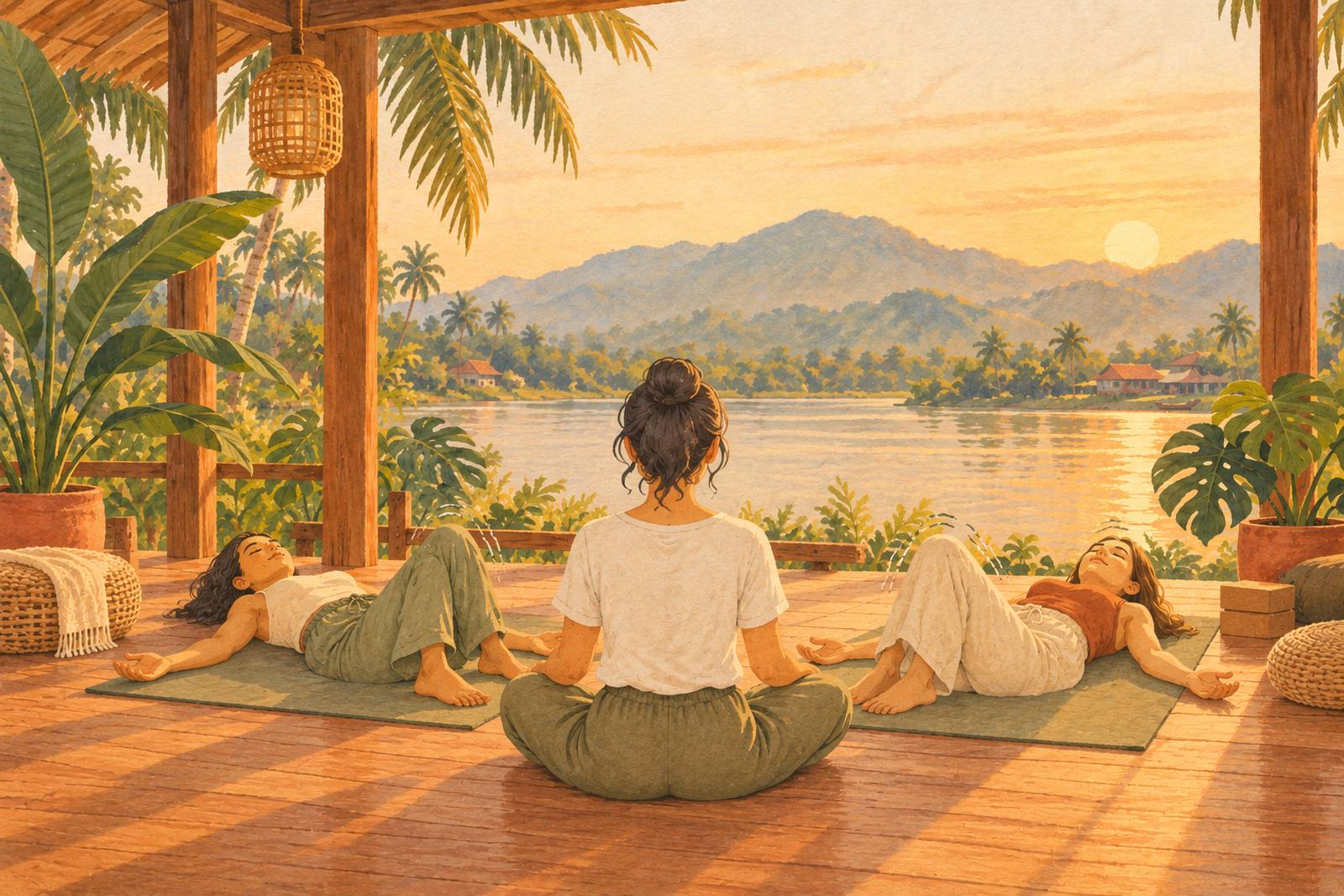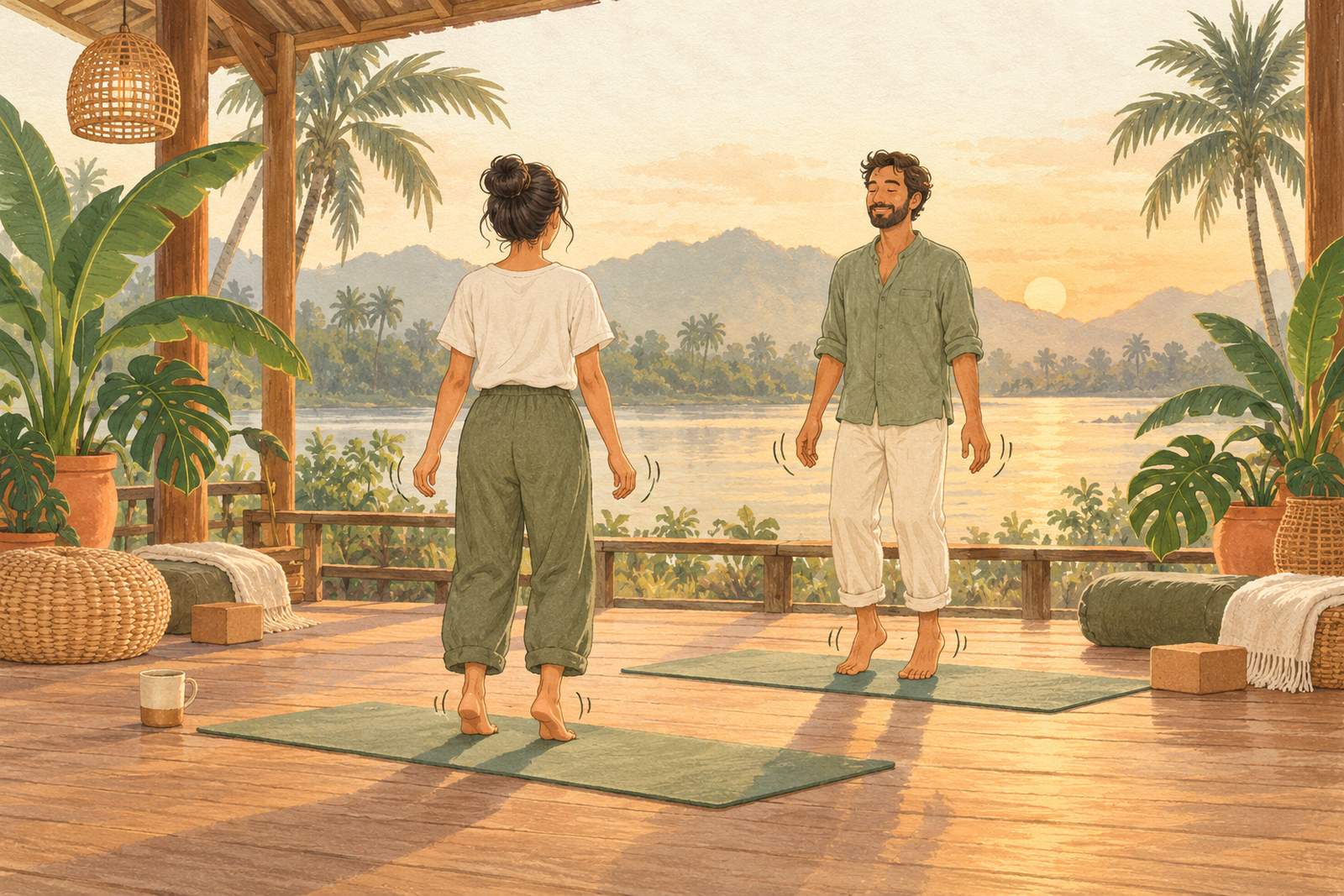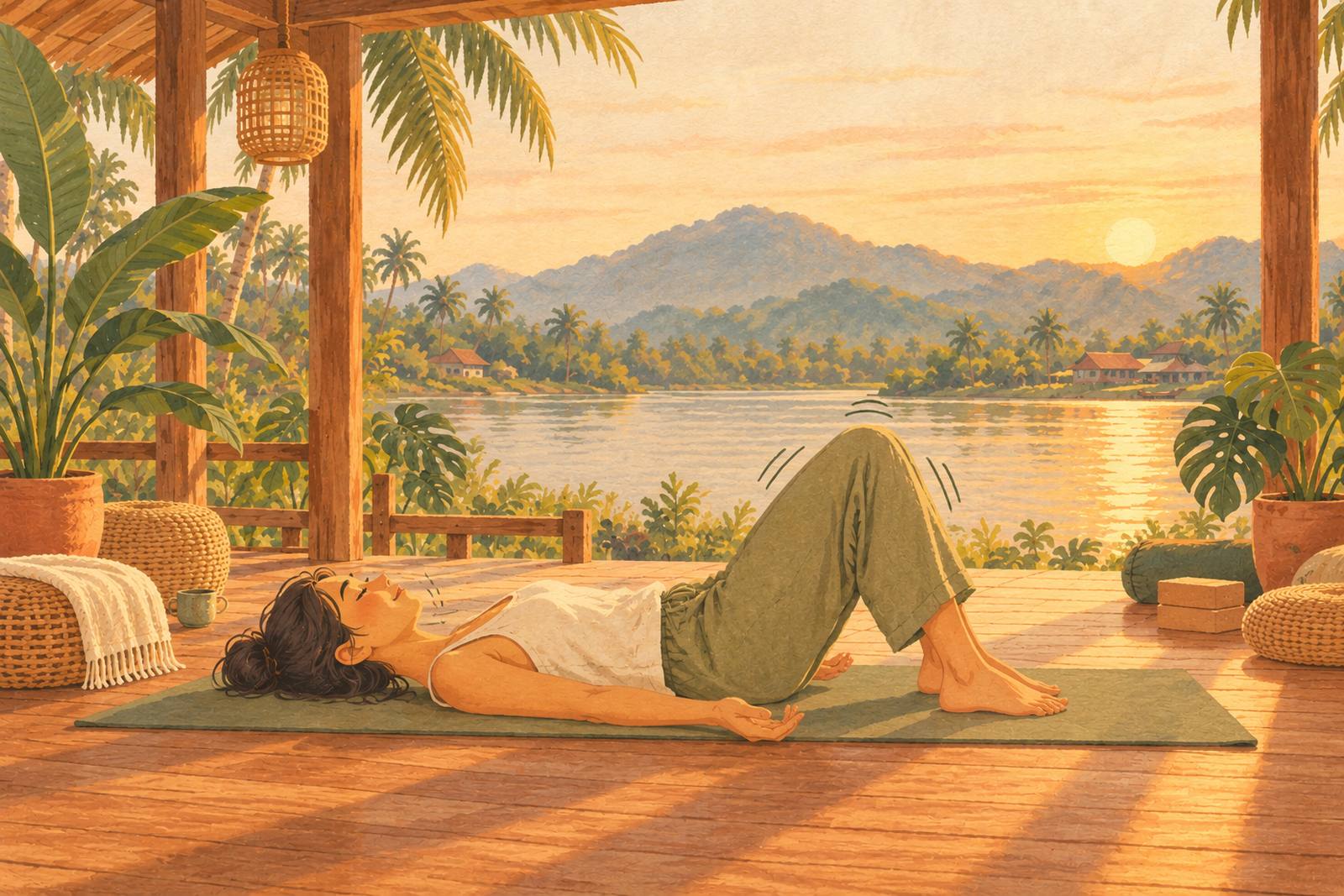
You have heard that the body can shake on its own in a therapeutic way, and you want to understand what that means before trying anything.
In short: voluntary shaking is something you do; therapeutic tremoring is a natural, involuntary shaking that some practices invite the body to produce on its own, usually after gently tiring certain muscles.
Voluntary shaking versus therapeutic tremoring
With voluntary shaking, you create the movement. With therapeutic tremoring, as taught in TRE®, a short series of exercises can invite a tremor that continues without you forcing it. You stay in charge: you learn to start, slow down, pause and stop it. See neurogenic tremors and TRE® shaking.
Research on TRE® is preliminary. A 2026 scoping review of 22 studies found promise and called for more rigorous work. This page does not teach a full tremor-inducing sequence.
How to pause and stop a tremor
TRE Global's self-regulation guidance teaches that you can slow or stop the process:
- Straighten your legs and walk around, or change position.
- Sit up, roll to your side, rest and drink some water.
- If you feel emotionally overwhelmed, slow down or pause until you feel steadier.
- If you are in physical pain, adjust or stop.
For beginners, TRE Global recommends a maximum of about 15 minutes of tremoring in the final position, and practising no more than three or four times a week at first. If you notice lasting discomfort, fear, anger or agitation after sessions, take a break and contact a certified TRE® provider.
Safety
Many people practise therapeutic tremoring safely. It is best learnt with a trained guide, especially if you have health conditions or a trauma history. TRE organisation guidance suggests medical clearance for concerns such as heart conditions, irregular blood pressure, recent surgery or injury, epilepsy, pregnancy, or diabetes. Check with your doctor.
Natural tremoring can feel unusual or bring up emotions. Learn it with a trained provider first, practise for short periods, and know how to stop. See guided shaking for a gentler voluntary option. These practices are wellness education and not a substitute for trauma therapy or medical care.