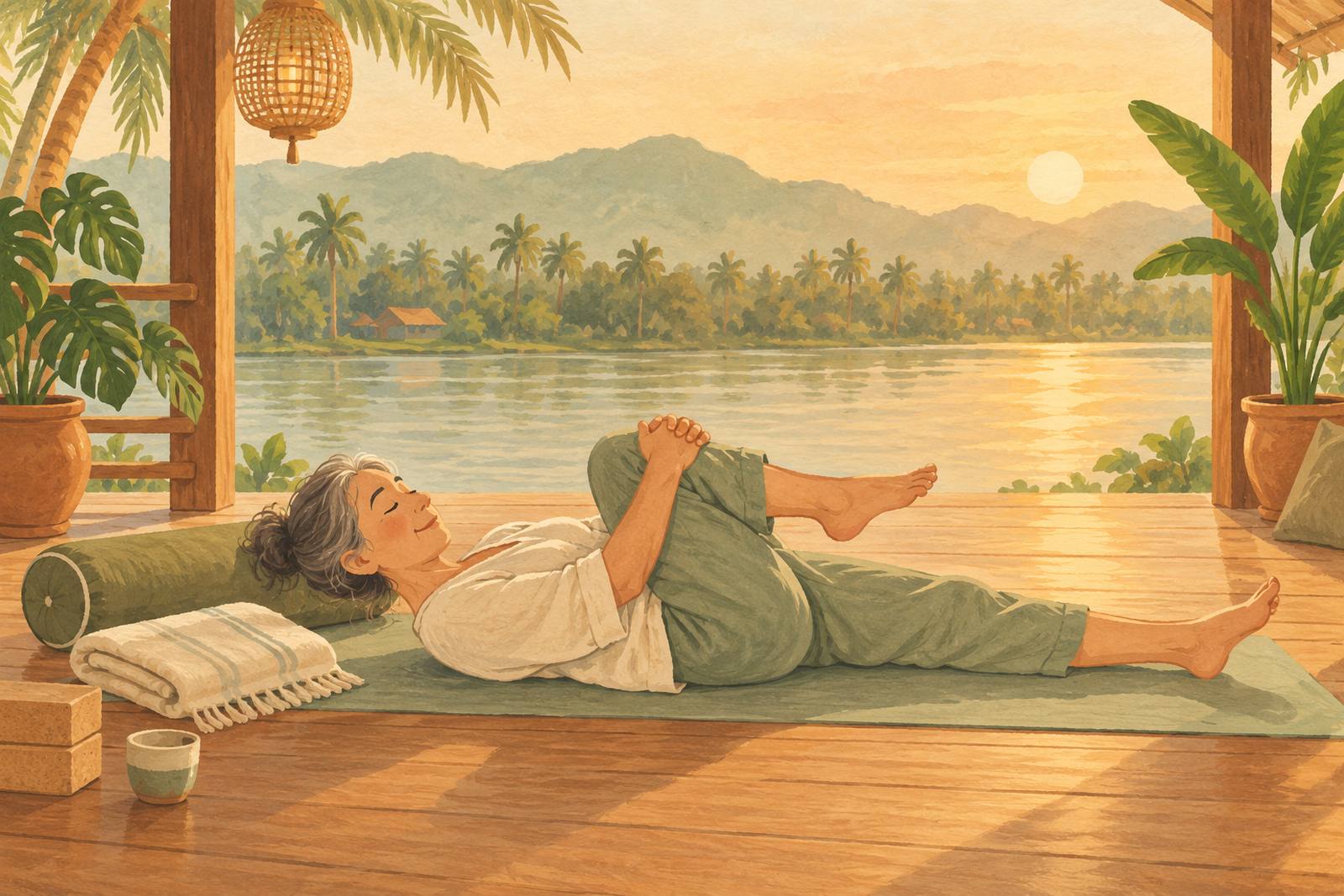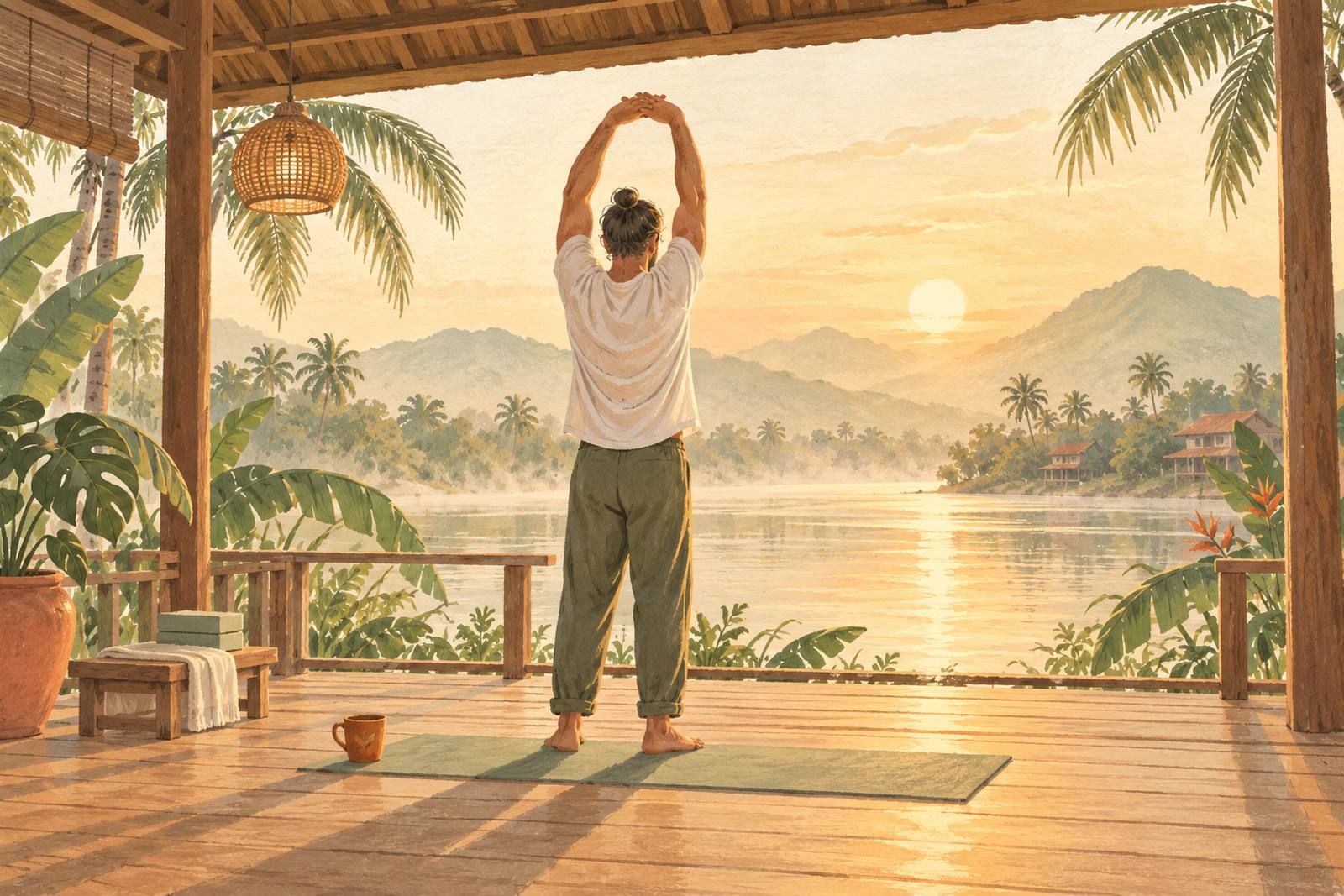
Sitting still feels impossible, but you still want a way to settle. Mindful movement lets you use the body: slowly, with attention, without turning it into a workout.
In short: mindful movement means moving slowly with full attention on sensation and breath. Walking, swaying, gentle stretching and flowing movements can all be done mindfully.
What mindful movement is
Harvard Health includes yoga, tai chi and qigong among its relaxation techniques: rhythmic breathing combined with postures or flowing movements, offering a mental focus that can distract from racing thoughts. The US National Center for Complementary and Integrative Health sometimes calls these "meditative movement" practices.
Yoga may help anxiety symptoms; evidence for diagnosed anxiety disorders is limited. Tai chi is generally considered safe; larger high-quality trials are still needed for tai chi, qigong and anxiety. If you are not normally active or have health problems or pain, check with a doctor before starting (Harvard).
A randomised trial of mindful walking in distressed adults found lower perceived stress after eight sessions over four weeks compared with no intervention. It was a small study without an active comparison group, so treat the finding as preliminary.
Five short practices
1. Mindful walking (3 to 10 minutes)
- Walk slower than usual.
- Notice each footstep, your arms swinging, and your breath.
- When your mind wanders, return to the feeling of your feet.
2. Swaying (2 minutes)
- Stand or sit with soft knees.
- Sway gently side to side. Let your arms hang.
- Let the sway get smaller until you are still.
3. Arm floats (2 minutes)
- Slowly raise your arms out to the sides and overhead, as if floating through water.
- Lower them just as slowly. Notice effort and ease.
4. Spinal waves (2 minutes)
- On hands and knees, or seated, slowly round and then gently arch your back within comfort (like a soft cat-cow).
- Move with the breath. Skip if your back complains.
5. Slow shaking (1 to 2 minutes)
- Loosely shake out your hands and arms, then stand still and notice.
See somatic exercises for beginners and morning somatic routine.
What you might notice: warmer limbs, a deeper breath, or simply more presence. How to stop: pause, feel your feet, look around.
A few minutes daily is a good start. These practices are wellness education and can sit alongside professional care, not replace it.