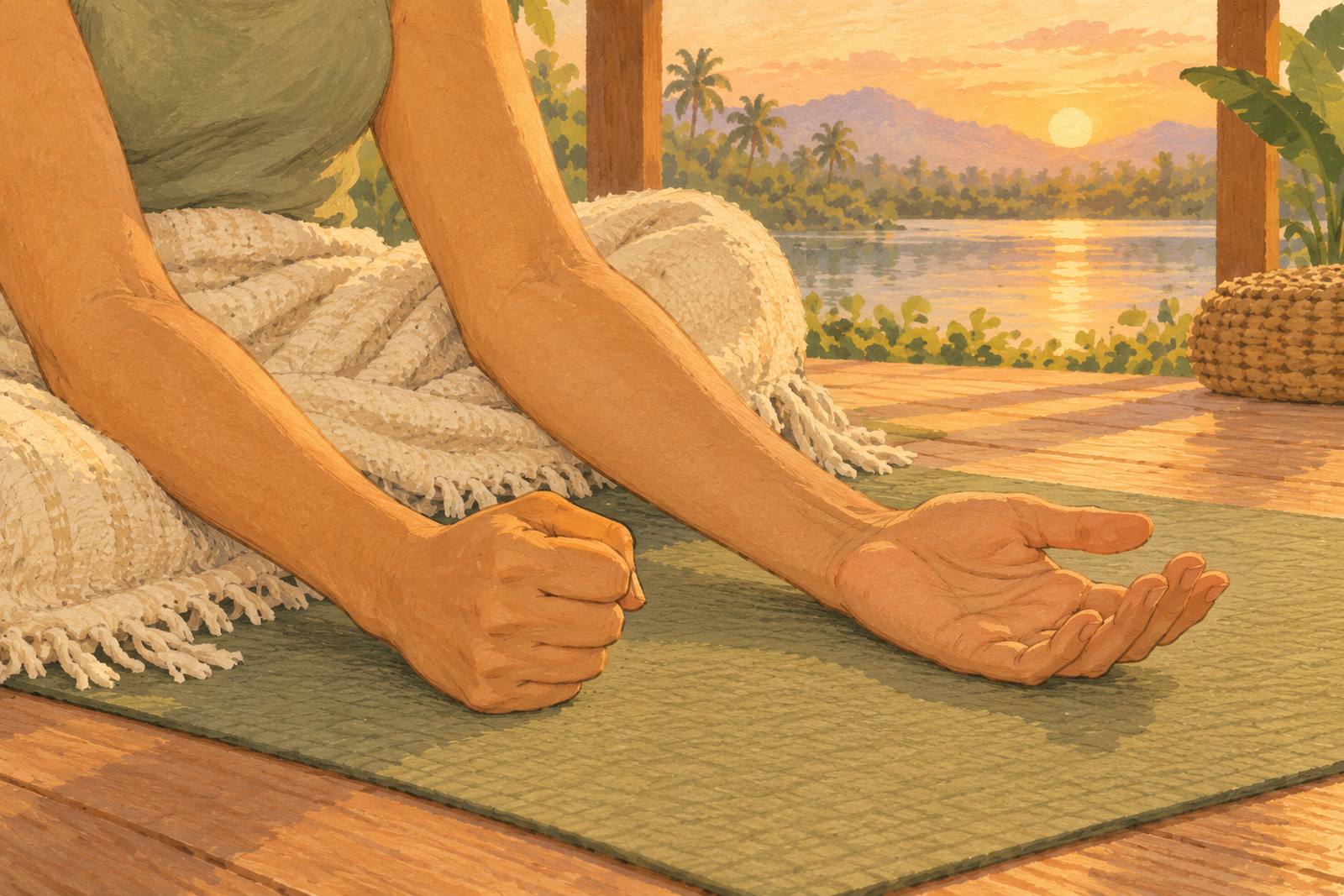
Your muscles feel tight, and you want a structured way to notice and release that tension. Progressive muscle relaxation (PMR) is a long-established technique for exactly that.
In short: tense one muscle group gently for about five seconds, then release for 10 to 20 seconds while noticing the difference, working through the body from feet to face.
What PMR is
PMR was developed by Edmund Jacobson in the early twentieth century. You create a little tension in a muscle group, notice what tension feels like, then release and notice ease. NHS inform notes that this can also help you spot early signs of anger or panic when muscles start to tense.
Research is mixed and often low quality, but many people find PMR helps them notice and release tension. NCCIH reports individual studies where PMR helped with dental anxiety and, in people with chronic low-back pain, with pain, anxiety and sleep. It is not a proven treatment for anxiety disorders or insomnia on its own.
Sources differ slightly on timings. A common pattern is about five seconds of gentle tension, then 10 to 20 seconds of release. Do not strain. Skip any area that hurts or cramps.
Full 15-minute script
Lie on your back if you can, with a pillow under your knees if your lower back is sensitive. Or sit comfortably. Close your eyes only if that feels okay.
- Take three easy breaths.
- For each area below: inhale and tense gently for about five seconds, then exhale and release for 10 to 20 seconds, noticing the contrast.
- Right foot and lower leg
- Left foot and lower leg
- Right thigh
- Left thigh
- Buttocks and hips
- Belly
- Chest (gentle; do not strain)
- Right hand and arm
- Left hand and arm
- Shoulders (lift toward ears, then drop)
- Neck (gentle; skip if you have neck problems)
- Face (soft scrunch, then release; jaw last)
- Rest for a minute, sensing your whole body. Look around before you get up.
Five-minute version
Combine areas: feet and legs together, hands and arms together, shoulders, face. Same tense-and-release pattern. A guided audio version is a useful addition if you prefer to follow along.
What you might notice: heaviness, warmth, tingling, or emotion. How to stop: open your eyes, move your fingers and toes, breathe normally. If relaxing makes you more anxious, pause and try movement first.
PMR uses deliberate tensing and releasing. TRE® uses specific exercises to invite the body's own natural tremor; they are different practices. See muscle tension from stress and relaxation before sleep. These practices are wellness education and can sit alongside care, not replace it.