You are exhausted, and rest does not seem to refill you. Work feels heavy, and even small tasks take more than they should. Burnout is a particular kind of long-term strain, and recovery usually needs more than a weekend off.
In short: burnout is a state of prolonged workplace stress and exhaustion. Recovery usually needs real rest and changes to workload, and gentle body-based practices can support your body as you recover.
What burnout is (and what it is not)
The NHS notes that long-term or severe stress can lead to physical, mental and emotional exhaustion, often called burnout. The World Health Organization classifies burnout in ICD-11 as an occupational phenomenon, not a medical condition. It is described as a syndrome resulting from chronic workplace stress that has not been successfully managed, with three dimensions:
- feelings of energy depletion or exhaustion;
- increased mental distance from one's job, or feelings of negativism or cynicism related to one's job;
- reduced professional efficacy.
WHO says burnout refers specifically to the occupational context and should not be applied to other areas of life. Symptoms still deserve attention, and a doctor can rule out other causes.
What recovery usually needs
Mayo Clinic points to heavy workload, long hours, lack of control and poor work-life balance as common drivers. Coping often means looking at what can change: talking with a manager, setting realistic goals, seeking support, getting sleep, exercising and using relaxing activities. Rest alone is rarely enough if the demands stay the same.
How long recovery takes varies a lot. Cleveland Clinic's experts say it can take from a few months to a few years, depending on the situation, how severe it is and the support available. Protective factors such as close relationships and existing professional support can help.
A low-energy 10-minute practice for burnout days
On days when energy is very low, keep practice tiny and kind. Skip anything that feels like effort. Stop whenever you wish.
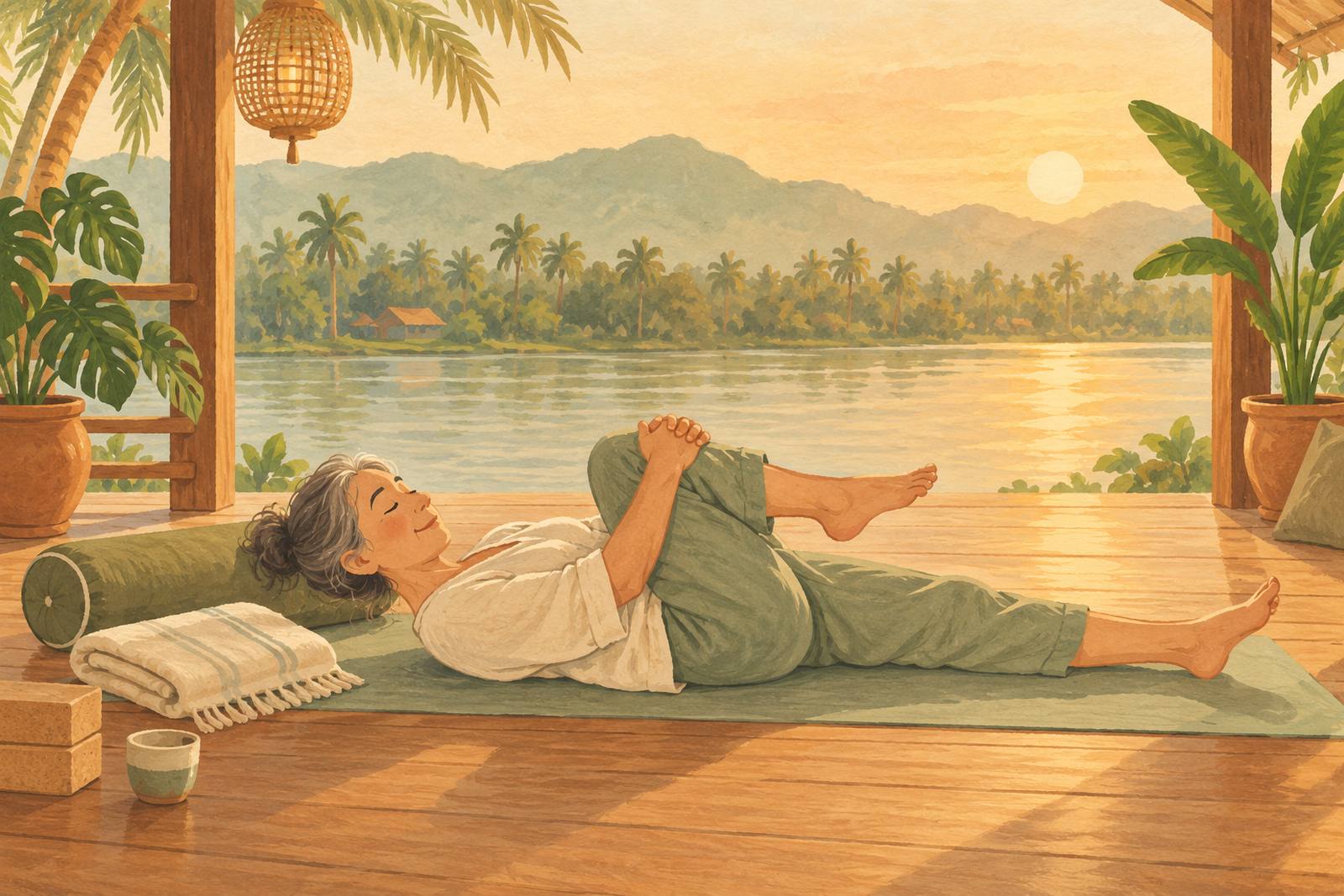
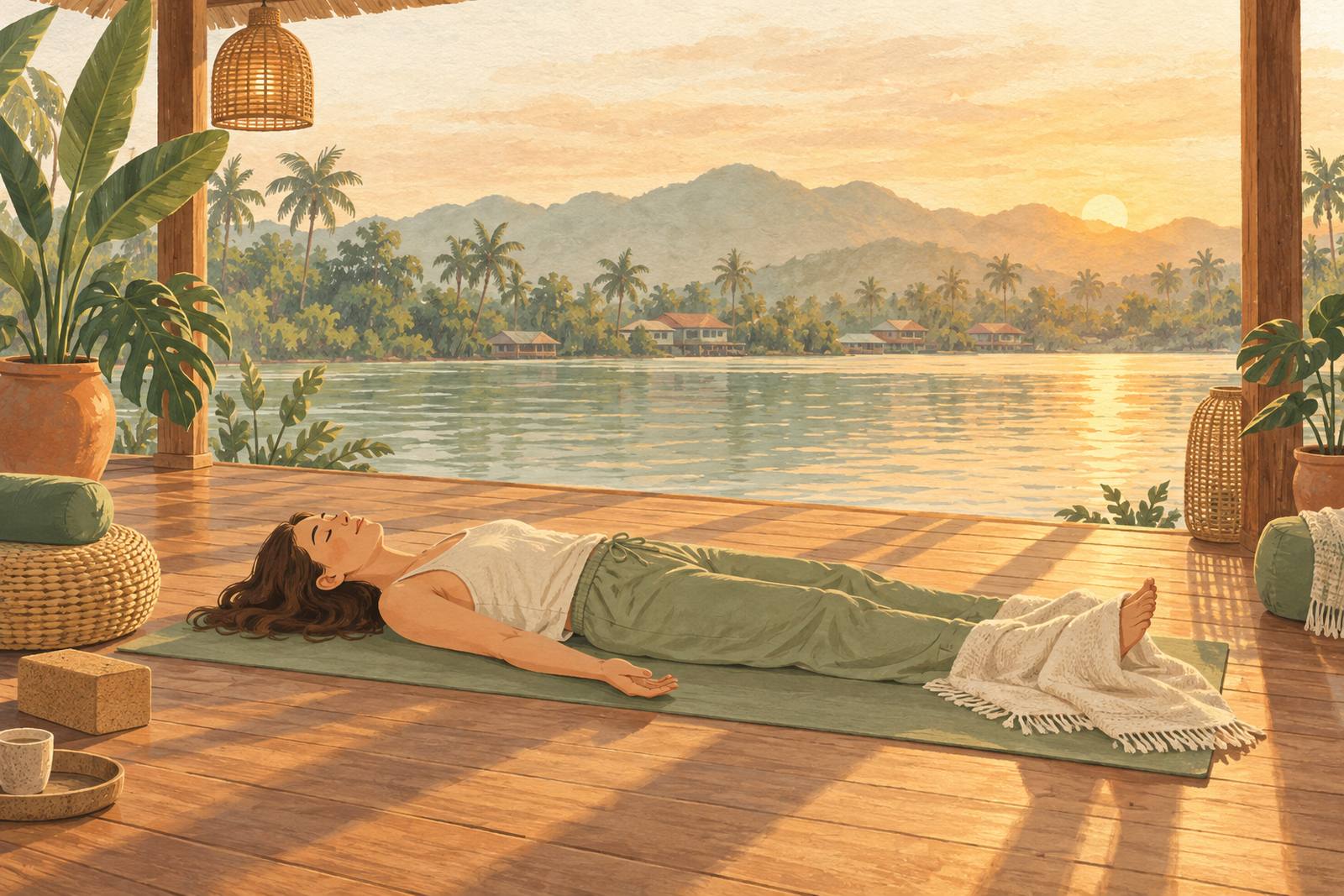
- Lying-down breath (3 minutes). Lie on your back. Rest a hand on your belly. Breathe slowly with a longer exhale.
- Gentle rocking (2 minutes). With knees bent, rock slowly side to side, or sway if sitting feels better.
- Legs up the wall or on a chair (3 minutes). If comfortable, rest your legs up a wall or on a chair seat. Soften your jaw and shoulders.
- Rest (2 minutes). Stay still and notice your breath. Look around the room before you get up.
What you might notice: a little more ease, or no change. That is fine. How to stop: open your eyes, sit up slowly and drink some water.
These practices can support relaxation and body awareness during recovery. They do not treat burnout. Somatic exercises are a gentle companion, not a fix. See somatic exercises for beginners and wired but tired.
If you are struggling to cope, cannot sleep, feel hopeless or are using alcohol or other substances to get through, please speak with a doctor or mental-health professional.