You want to know what the TRE® exercises actually are, whether you can learn them from a video, and how often people practise. This page gives the overview; the full sequence is taught in sessions.
In short: TRE® uses about seven simple exercises that gently stretch and tire the legs and hips before lying down to let a natural tremor arise. Learning with a provider first helps you practise safely at home.
What the sequence involves (high level)
The TRE® technique consists of a short series of sequential exercises, commonly described as seven, used to invite a self-induced tremor (as summarised in the 2026 scoping review of TRE studies). In broad terms, the process usually includes:
- standing and floor-based movements that gently stretch and fatigue the legs and hips;
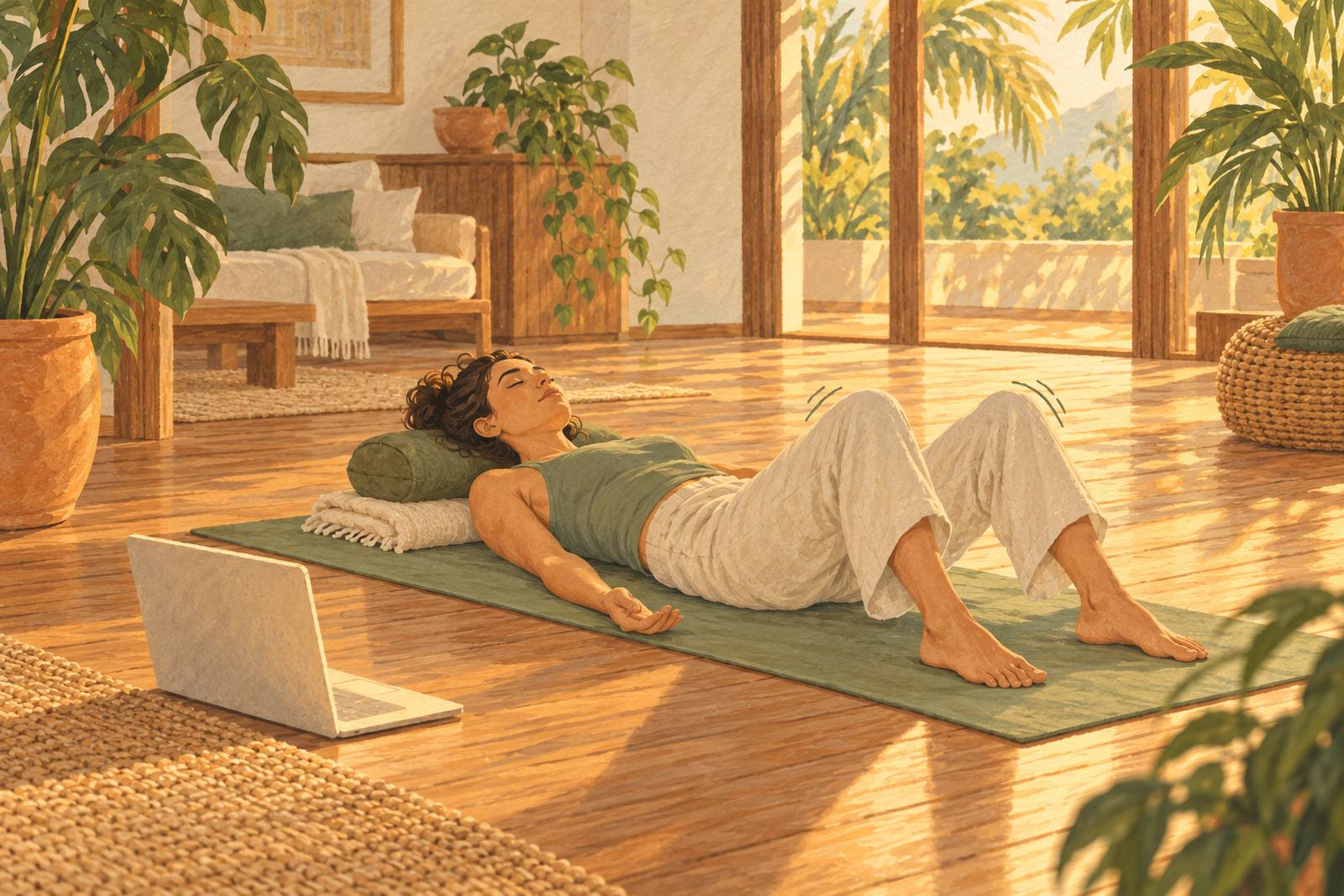
- a final resting position, often on the back, where a tremor may arise;
- time to stay with the tremor at a pace you can manage;
- rest and orientation afterwards.
Exact positions, timing and modifications are adapted to the person. This article does not publish a full self-taught protocol. Full instruction happens with a trained provider, who can also teach you how to slow or stop the tremor.
Can I do TRE® exercises at home?
Yes, once you have learnt them safely. Most providers, and TRE Global, recommend guided sessions first, especially if you are new or have a significant trauma history. After that, many people practise at home as a self-help tool.
How often should I practise?
TRE Global's beginner guidance suggests limiting tremoring to about 15 minutes and practising no more than three or four times a week at first. Later, once you can self-regulate, you may increase length or frequency if it still feels good. Always adjust to how your body responds. Tiredness, emotion or soreness afterwards are cues to do less, not more.
What about YouTube videos?
There are TRE® videos online. A video cannot see how activated you are, or help you stop if the tremor feels too intense. Learning with a provider helps you understand regulation: when to begin, slow down, pause and stop. See TRE® for beginners and what research says.
If you want to learn with Camille, see online TRE® sessions. These pages are wellness education and can sit alongside professional care, not replace it.